
By protecting the wellbeing of the ewe, through strict health and welfare management, this flock of Mules, Blackface, Border Leicesters and Texel breeding, just goes from strength to strength.
Countless show accolades, including an unbeaten Ewe Lamb, Reserve Champion Males and Females, across Ballymena, Antrim, Omagh, Limavady Shows and Open Days, resulting in top sale prices for these quality examples of their breed, is only a snapshot of what is being achieved behind the scenes on the McFarlane family farm.
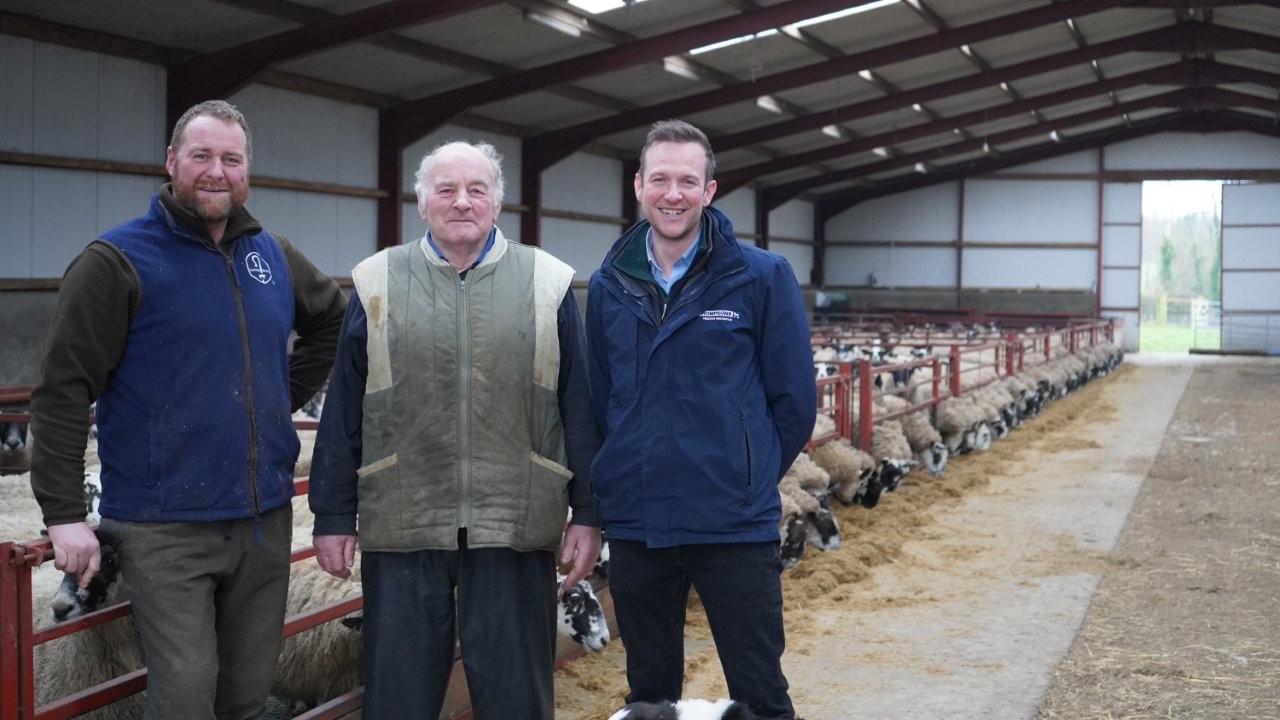
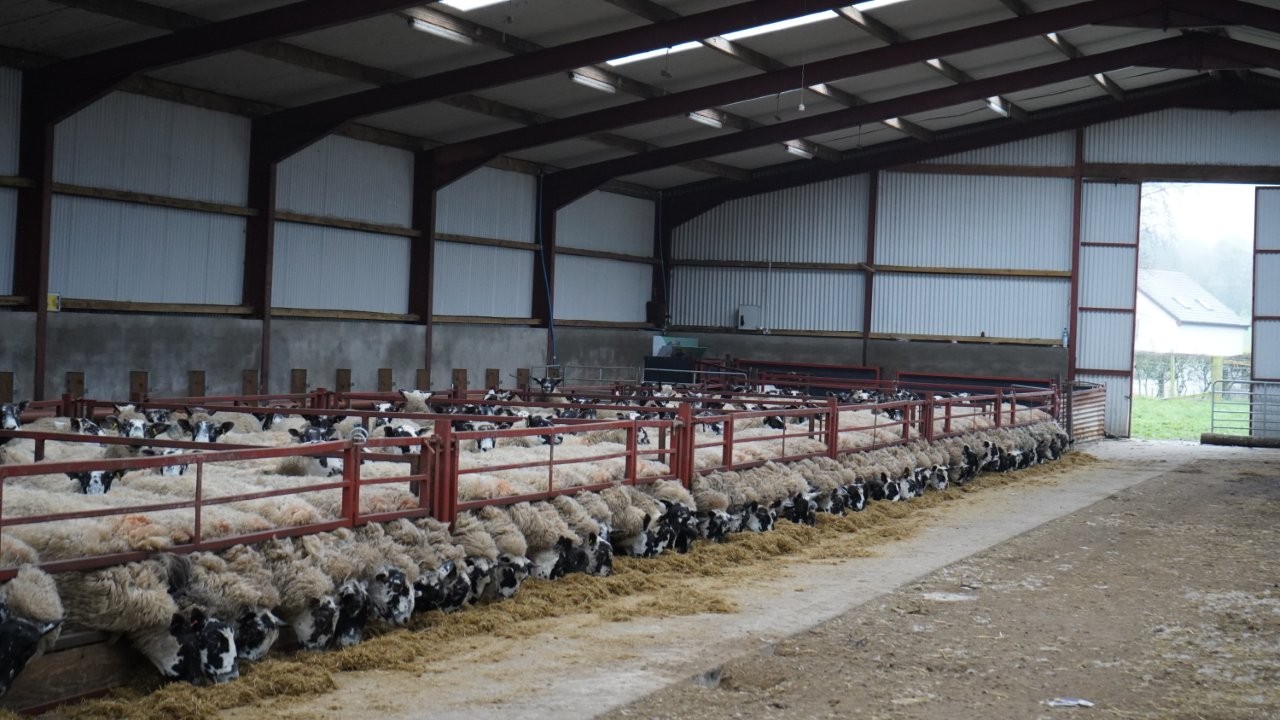
The Benbradagh Hill Flock lies on the outskirts of Dungiven, framed by the hill that has not only named the flock of 1,100 mule ewes, 250 Blackface sheep and 18 Border Leicesters, but also provides grazing for them throughout the year. With all ewes housed by the middle of January, feeding has commenced for the predominantly Mule Ewe flock run by Alwyn and Joanne McFarlane and Mervyn, Alwyn’s father. With twins, triplets and singles currently penned separately, everything is fed through a diet feeder, which Alwyn says works for them by ensuring feed is always in front of the flock, without having to push silage up as regularly.
Diet Feeder
With a diet composed of silage analysing at 43.8% dry matter, 13.8% protein and 9.7MJ ME and a Thompsons’ formulated blend, ewes are fed 350g initially, building up to 1kg pre-lambing for doubles, 1,500g for triplets and singles are fed a flat rate up to 500g. With a lambing percentile over 209, and up to 200 ewes lambing in a day, from roughly the 10th of March, Alwyn needs to ensure that colostrum quality and lamb thrive are the best they can be. With help coming in from one man for four weeks over lambing time during the day, the separate pens of ewes is converted into an impressive 250-pen lambing shed.
Ewes and lambs are put in their own pen post-lambing, until Alwyn is confident that the lamb has received colostrum and is starting to find its feet. As soon as both the ewe and lamb(s) are coping well they will start to be turned out to grass in three to six-acre plots, which Alwyn says enables them to manage any initial issues more easily. “When they are in smaller, more sheltered fields it gives them a good start and we can work with any problems more readily. Once they are thriving, they will gradually be moved to bigger fields further away from home,” says Alwyn.
Creep Fed
At two weeks the lambs will be creep fed on Thompsons’ Premier Lamb Starter Pellets and Alwyn likes to get lambs sold early, by 14 weeks, if possible, which with a healthy (repeat) market for their ewes and lambs, can be achieved. With the lambs off the ewe, Alwyn says this allows the ewes to get back to full health post-lambing, with many taking advantage of a Benbradagh Hill boot camp, that gets them fit and ready for tupping again.
With about 140 sets of triplets to lamb, Joanne McFarlane will also manage the pet lambs, ensuring that they are well looked after until they are sold in batches of ten, again to repeat customers. This is alongside Joanne’s flock of 18 Border Leicesters, among which ten are due to lamb at the end of February.
With a solid system that ensures care and attention to detail at every stage of the ewe’s cycle, the Benbradagh Hill Flock seems to be an integral part of the countryside that it is so well suited to, where the health and sustainability of both the hill and the flock are both reliant and complimented by each other.
To find out how Thompsons’ Ewe and Lamb rations could maximise the performance of your flock this winter, contact your local Thompsons’ representative or Belfast on; 028 9035 1321.
Posted 05,02,26 by allison.
Back to NewsPosted 19,10,26 by allison.
Posted 05,10,26 by allison.
Posted 26,03,26 by allison.
Posted 23,02,26 by allison.
Posted 19,02,26 by allison.